
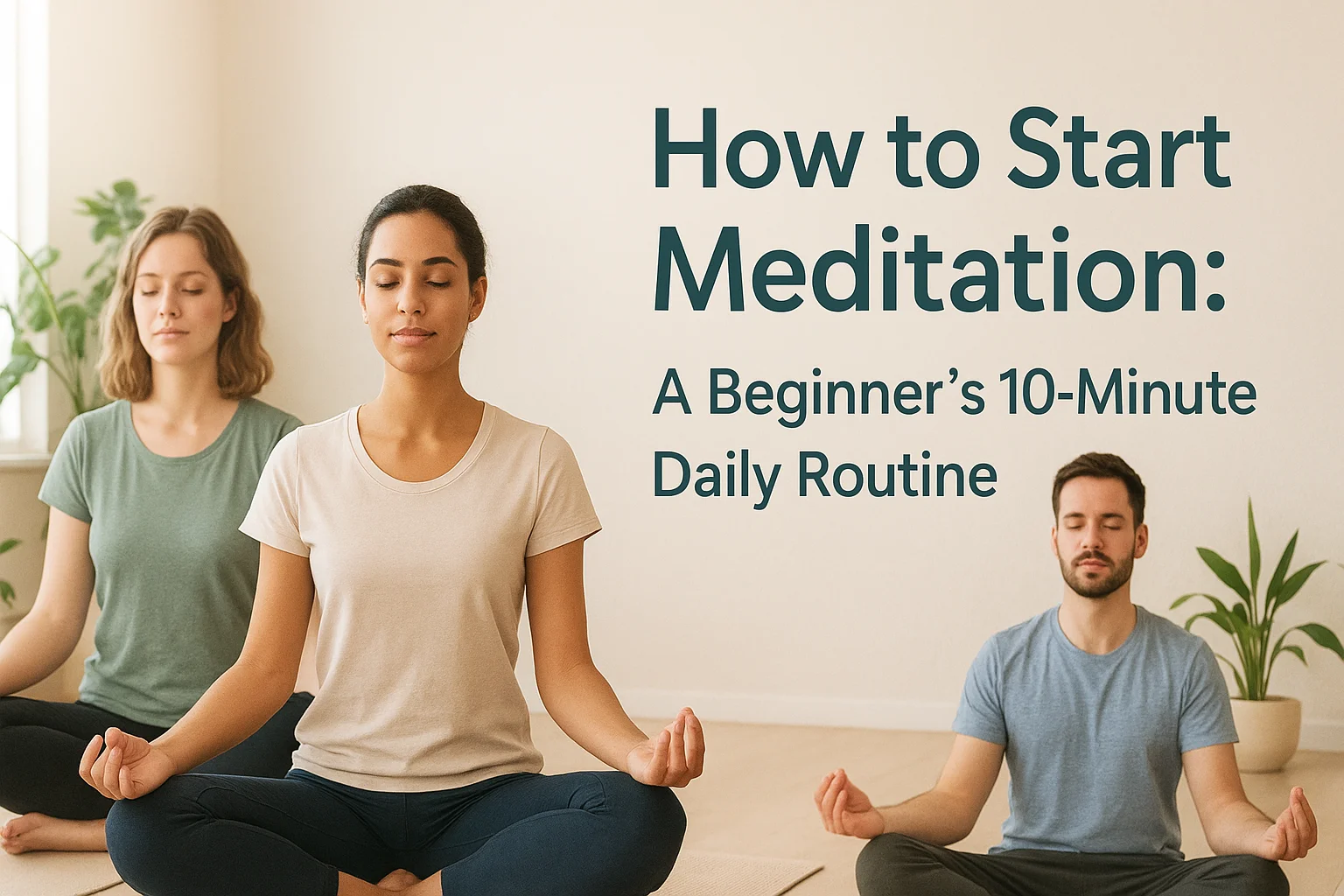
Meditation is one of the best ways to improve your mental and physical health. Whether you are managing stress, anxiety, or just want to improve your concentration, beginning a meditation practice daily can provide amazing benefits. If you are new to meditation, the idea of sitting quietly and concentrating for long intervals may be daunting. Don’t you worry! You can start with an easy 10 minutes a day, and with time, it will become second nature.
Here in this article, we will break down a 10-minute beginner’s meditation routine that you can follow every day. And we will also discuss how you can go about setting up the proper environment to meditate using options such as incense or essential oil diffusers to maximize your session.
Why Meditate? The Benefits of Meditation
Let’s first briefly discuss why meditation is so great, and why it’s particularly wonderful for those new to the practice:
- Reduction of Stress: Meditation keeps your mind tranquil, which can lower the stress hormone, cortisol.
- Increased Focus: Mindfulness helps you be in the moment and will increase your focus span, and thus, your productivity is improved.
- Better Sleep: A peaceful mind is one of the secrets to a good night’s sleep.
- Better Emotional Health: Meditation can balance negative emotions and improve your mood.
- Better Physical Health: Research studies show that meditation can reduce blood pressure, decrease one’s tendency to be anxious, and improve physical health.
So, if you are new to meditation, you are in for a treat. Starting with just 10 minutes a day can make a big difference!
Setting Up the Perfect Meditation Environment
Before you start, take the time to set up an area where you’ll be able to meditate at ease. The space you choose for your meditation will really make a difference in the quality of your session.
1. Find a Quiet Space
Choose a peaceful spot in your home where you won’t be disturbed. This could be in your bedroom, living room, or even outside in your garden, as long as it is quiet and free from distraction.
2. Soft Lighting
Dim the lights or light scented candles. Natural light is lovely, too, but in the evening or when it is dark, candles or a small lamp with a warm light can create a relaxing ambiance.
3. Aromatherapy (Incense or Essential Oils)
Aromatherapy might just be able to take your meditation experience to the next level. Light an incense stick or an essential oil diffuser with relaxing fragrances such as lavender, sandalwood, or chamomile. These fragrances are proven to induce relaxation and concentration, hence ideal for meditation.
4. Comfortable Seating
You don’t need an expensive cushion or yoga mat, but being comfortable is key. You can sit in a chair, on a cushioned seat or bed, or directly on the floor. The point is to be relaxed in your body but to keep your back straight to avoid straining.
5. Reduce Distractions
Turn off your phone, close apps that you don’t need open, and stop any background noise that may make it difficult to focus.
Now that we’ve got your environment set, let’s establish a basic, 10-minute beginner meditation routine.
A Basic 10-Minute Meditation Routine for Beginners
This 10-minute routine is laid out in simple steps to be practiced daily. You don’t need to be a pro to do it, and the more you practice, the easier it will get. Let’s begin!
Step 1: Set Your Intention (1 Minute)
Take a moment to establish your intention for the meditation before you start. This can be something as easy as, “I want to relax,” or “I want to be present today.” An intention provides a specific focus and guides your meditation.
- Sit comfortably.
- Gradually close your eyes and breathe a few deep breaths.
- Take a moment to think of an intention for your practice. An intention can be as simple as “I want peace today” or “I’m open to stillness.”
Simply allow this intention to come into your practice, as it will create an even more focused practice for you.
Step 2: Focus on Your Breath (3 Minutes)
One of the simplest forms of meditation is to focus on your breath. This is referred to as “mindfulness breathing.” It serves to bring you back to the present moment, which is necessary for meditation.
- Begin by taking a slow, deep inhalation through the nose and exhaling slowly through the mouth.
- While breathing, bring all of your focus to the feeling of the breath coming into and out of the body.
- When your mind begins to drift (and it will!), bring your attention back gently to your breathing without self-criticizing. It’s only natural that thoughts will arise, but just let them pass as you bring your attention back to your breath.
Do this for three minutes. If this helps, you can count your breath. For instance: inhale for four seconds, hold for two, and exhale for four seconds.
Step 3: Body Scan (2 Minutes)
A body scan is a quick, easy technique that allows you to focus on your body and relax. It can also be used to become aware of areas of tension.
- Begin with your toes and bring your focus up slowly through every part of your body, until you reach your head.
- As you inhale and exhale, bring awareness to any parts where you notice tension or discomfort. You don’t have to correct them; simply notice them.
- For instance, begin with your feet: “I feel my feet on the ground.” Gradually move up: “My legs are relaxed,” “I feel my stomach gently expanding and contracting,” etc.
Take 10-15 seconds per body part as you work your way from your toes up to your head.
Step 4: Work on Your Thoughts (2 Minutes)
You might get a lot of thoughts during meditation, but don’t try to suppress them. Allow them to come and go on their own. This is something you need to practice being mindful of.
- Think of your thoughts as clouds in the sky. You are the sky, and the clouds are your thoughts.
- When thoughts occur, observe them without judgment, and just let them drift away. This instructs you in paying attention to your thoughts yet not becoming entangled within them.
Take around two minutes to do this. If your mind begins to speed up, just come back to your breathing or your body scan.
Step 5: Shutting Down the Session (1 Minute)
After you have meditated for 10 minutes, take a brief pause to come back to the present moment.
- Gently slow your breathing. Breathe deeply a few times.
- Slowly open your eyes and observe how you feel. Do you feel more relaxed? More peaceful?
Make yourself proud of your practice. You have dedicated 10 minutes of your day to taking care of your mental and emotional health.
Tips for Remaining Consistent with Meditation
Now that you understand how to meditate, here are some tips for remaining consistent with your daily practice:
- Start small: You do not have to sit for hours. Begin with even 10 minutes, and simply add more time later if it is needed.
- Set a routine: Meditate at the same time daily, say in the morning, before sleeping, or during lunch hours. This creates a habit.
- Listen to guided meditations: If you experience difficulty staying focused on your own, certainly make use of a guided meditation app or video to help you stay focused.
- Be kind to yourself: Meditation can be difficult, especially in the very beginning. Don’t feel guilty if your mind is distracted. Just refocus your attention and keep going.
Integrating Meditation into Your Everyday Life
One of the greatest things about meditation is that you don’t need to practice it in a silent, dedicated room all day. You can practice mindfulness during your entire day. For instance, you can meditate while walking, eating, or even doing the dishes. The idea is to bring awareness and be present in whatever you do.
Conclusion: Start Your Meditation Journey Today
Meditation is not something that has to be complex or time-consuming. Begin by taking 10 minutes for yourself each day, which is an easy way to improve your health and well-being. Take time to create a peaceful atmosphere and focus on your breath, body, and mind, and you will begin to create an ongoing practice of meditation that improves both mental and physical well-being.
Consistency is what is important. Setting aside even a few minutes of your day practicing meditation can bring you peace of mind, improved concentration, and a concise brightening of your attitude toward life. Grab your favourite things, incense, music, essential oils, and begin your meditation journey today!
Pingback:8 Easy Morning Habits For A Better & Healthier Life