
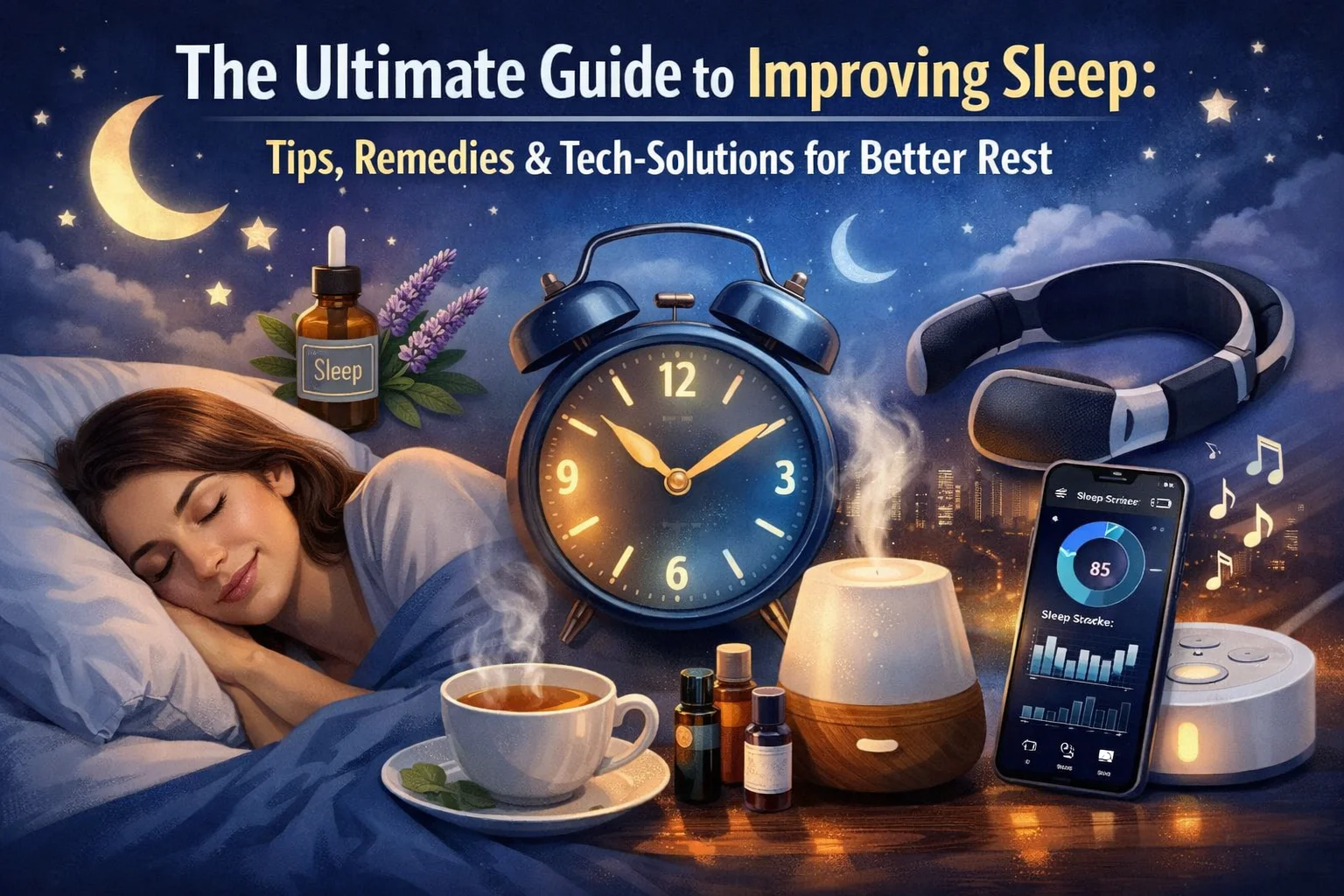
In our fast-moving world, sleep is one of the first things that always gets sacrificed the moment life gets busy. Whether it’s because of work stress, personal commitments, or just late-night entertainment, sleep always gets pushed to the side. But the truth is, sleep is just as critical as diet and exercise when it comes to maintaining our health. Good sleep impacts everything, from mental clarity to immune function, emotional stability to physical well-being.
This article is about to become your ultimate guide to improving sleep. We are going to talk about why sleep is important, how much you really need, what sleep issues most people face, and what the science says about sleep cycles. You will also get practical advice on how to improve sleep with the help of lifestyle changes, natural remedies, and even innovative sleep technologies that can optimize your nightly rest.
Why Sleep Is Important for Your Health
Although the importance of sleep seems self-evident, most of us tend to be unaware of its deep and far-reaching effects. Sleep affects almost all systems in the body, from cognitive function to physical health. Here’s why:
Be it cognitive functioning or physical health, sleep affects almost every system in the body. Here’s why:
1. The Brain Needs Sleep
Sleep is crucial primarily because it keeps the brain healthy. The brain accomplishes certain critical tasks while sleeping, including recovery, resetting, and getting prepared for the challenges ahead. Sleeping helps the human brain clear waste products it produces during daily activities. These, if allowed to persist, can build up and inflict long-term damage on the brain. For instance, research findings indicate that those who consistently get inadequate sleep have a buildup of certain proteins associated with Alzheimer’s disease.
A shortage of quality sleep can have immediate effects on cognition, which includes:
- Difficulty concentrating or focusing
- Impaired memory and recall
- Increased irritability and mood swings.
- Poor decision-making skills
These consequences arise because during sleep, the brain consolidates memories, processes emotions, and restores the chemical energy that it needs to work properly. If sleep is not adequate, your brain will not be able to perform these functions effectively.
2. Sleep and Physical Health
Just as your brain needs sleep, so does the rest of your body. Your body does most of its repairing, restoring, and replenishing while you’re sleeping. It also helps your body regulate its hormones, like cortisol (the stress hormone), leptin and ghrelin (hormones that control your hunger), and insulin, too, which controls your blood sugar levels.
Without enough sleep, you might feel:
- Increased hunger and cravings for unhealthy foods
- Increased stress due to high levels of cortisol
- Increased susceptibility to colds or other infections, as one’s immunity is lowered.
Chronic sleep deprivation has been linked to serious health problems, from heart disease and diabetes to hypertension. And indeed, recently the American Heart Association added poor sleep to its list of modifiable risk factors for cardiovascular health. If you are not getting enough sleep, you are setting your heart and your overall health up for harm.
Understanding the Stages of Sleep
Sleep is not a single, continuous state. Rather, it is made up of different stages that follow a cycle throughout the night. Understanding these stages can help you appreciate the fact that quality sleep involves more than simply how much time you spend in bed.
Stage 1: Light Sleep (Non-REM Sleep)
The first stage of sleep is light sleep, which happens right when one falls asleep. During this stage, the heartbeat and breathing start to slow down, and there are slow eye movements; muscles also start to relax. This stage is easy to wake up from, and it’s characterized by a transition from wakefulness into deeper stages of sleep.
Stage 2: Deeper Light Sleep (Non-REM Sleep)
During the second stage, your body becomes even more relaxed. Your heart rate slows down, your body temperature cools, and your brain waves slow down further, with short bursts of electrical activity known as sleep spindles. You are still quite easily awakened, but stage 2 is an important sleep stage for your body to transition into deeper sleep.
Stage 3: Deep Sleep (Non-REM Sleep)
Now, Stage 3 is where the magic happens. That deep, restorative sleep is crucial for physical recovery. Your heart rate and breathing are at their slowest, and it’s the hardest stage to wake up from. This is when your body repairs tissues, builds bone and muscle, and strengthens the immune system.
REM Sleep: The Dream Stage
Rapid Eye Movement (REM) sleep is when most dreaming occurs. Despite being the most active phase of sleep, REM is critical to mental health: during REM, the brain consolidates memories, processes emotions, and retains learning. The body is temporarily paralysed during such a phase to prevent acting out dreams physically. Curiously, the longer one sleeps, the more time they spend in REM during later cycles of the night.
Each sleep cycle is approximately 90 minutes, and during a healthy sleep pattern, cycles are repeated multiple times during the night. Poor sleep quality or interrupted sleep can interfere with your body receiving full benefits from each stage, since these restful nighttime cycles are critical.
Sleep Needs by Age:
Sleep is essential for your health and wellness, but how much sleep you need is very dependent on your stage in life. By identifying the ideal amount of sleep for each stage, you can make better decisions about how to get more rest and maximize your health potential. Each age group, from infants to seniors, has unique sleep requirements that promote the physical, mental and emotional aspects of growth and development. Below is a guideline for how much sleep you should be aiming toward in each stage of your life:
- Newborns (0-3 months): 14-17 hours
- Infants (4-11 months): 12-15 hours
- Toddlers (1-2 years): 11-14 hours
- Preschoolers (3-5 years): 10-13 hours
- School-age children (6-13 years): 9-11 hours
- Teenagers (14-17 years): 8-10 hours
- Adults (18-64 years): 7-9 hours
- Older adults (65+ years): 7-8 hours
Common sleep disorders and how they impact the quality of sleep.
Sleep disorders can turn your life upside down and affect everything from daytime energy and mood to overall health. Though many factors play a critical role in these issues, being informed about the causes is yet another step towards managing and being able to treat them. Let’s show you some common sleep disorders and why they occur.
1. Insomnia: Difficulty Falling or Staying Asleep
What It Is:
Insomnia is a condition of not being able to fall asleep, stay asleep, or return to sleep after an early awakening. Sometimes it lasts just a few nights, while other times it becomes a long-term problem.
Causes:
- Stress and Anxiety: High levels of stress or anxiety raise cortisol levels, the stress hormone, making it difficult to sleep and relax.
- Poor Sleep Habits: Poor sleep times, excessive screen time before bed, or intake of caffeine and alcohol prior to bed disrupts one’s natural sleep pattern.
- Nutritional deficit: Nutrient deficiencies such as magnesium, vitamin D, and B vitamins affect sleep. Magnesium relaxes muscles, whereas B vitamins are required for making melatonin, the sleep hormone.
- Hormonal Changes: Sleep disturbances can also be caused by hormonal changes associated with thyroid conditions or menopause.
- Chronic Pain or Illness: Disorders such as arthritis or GERD (Gastroesophageal reflux disease) may prevent proper sleep because of pain or discomfort.
Why It Happens:
Insomnia often results from stress, poor habits, or physical conditions that interfere with the brain’s ability to relax and fall into a restful sleep.
2. Obstructive Sleep Apnea (OSA): Breathing Problems During Sleep
What It Is:
It is a condition in which your airway becomes blocked during sleep. Consequently, it stops you from breathing for a short time, resulting in the development of poor-quality sleep and potential risks of health complications related to high blood pressure.
Causes:
- Obesity: Carrying excess weight, especially around the neck, may block the airway and cause difficulty in breathing during sleep.
- Enlarged Tonsils or Adenoids: Larger tonsils or adenoids can block the flow of air, especially in children.
- Ageing and Muscle Weakness: With increasing age, the muscles responsible for keeping the airway open become weaker, hence predisposing to apnea.
- Genetics: There is a genetic predisposition; if your parents had sleep apnea, you may be more prone to it.
- Hormonal and Metabolic Problems: These issues include diabetes and insulin resistance, which may lead to an increase in the fat deposits in one’s throat, thus causing sleep apnea.
Why It Happens:
When the muscles at the back of the throat are too relaxed, this blocks the airway and makes it difficult to breathe, which in turn upsets sleep.
3. Restless Legs Syndrome (RLS): An uncontrollable urge to move the legs
What It Is:
RLS is characterized by an uncontrollable need to move one’s legs, often with sensations such as tingling or itching. Symptoms worsen in the evening and interfere with sleep.
Causes:
- Iron Deficiency: Iron deficiency causes an imbalance in the brain chemical dopamine, affecting movement regulation.
- Dopamine dysfunction: When there is a problem with dopamine, the brain can misfire and result in the urge to constantly move your legs.
- Pregnancy: RLS is common in pregnant women and may be caused by a hormonal change or iron deficiency.
- Other Chronic Conditions: Ailments such as diabetes, neuropathy, and Parkinson’s disease, which affect the nerves, also lead to RLS.
- Genetics: The tendency of RLS to run in families indicates a genetic link.
Why It Happens:
RLS is due to an imbalance in the dopamine-producing system within the brain, perhaps from low iron levels, genetic influences, or other disease states.
4. Narcolepsy: Excessive Daytime Sleepiness
What It Is:
Narcolepsy is a sleep disorder that causes excessive daytime drowsiness and sudden irresistible bouts of sleep, usually occurring at inappropriate times in daily activities.
Causes:
- Genetics: There are certain genes, such as HLA-DQB1, that increase the risk for narcolepsy.
- Hypocretin Deficiency: Narcolepsy is commonly the consequence of a lack of hypocretin, a brain chemical involved in the modulation of wakefulness and REM sleep.
- Autoimmune Response: Sometimes, an autoimmune attack against the cells of the brain that produce hypocretin, due to a viral infection, occurs.
Why It Happens:
Narcolepsy occurs because of the brain not producing adequate hypocretin, which impacts the body’s ability to stay awake during the day and sleep properly at night.
5. Parasomnias: Abnormal Sleep Behaviours
What It Is:
Parasomnias are abnormal sleep behaviours, such as sleep-walking, sleep terrors, night terrors, bed-wetting, and sleep-eating.
Causes:
- Genetics: Many parasomnias run in families, indicating a genetic factor.
- Sleep Deprivation: Sleep deprivation can lead to a predisposition to parasomnias due to interruptions of normal sleep architecture.
- Stress: Abnormal sleeping behaviour may be caused by stress or anxiety.
- Medications: Certain drugs, particularly sedatives, antidepressants, and antipsychotics, may include parasomnia as a side effect.
Why It Happens:
Parasomnias result from misfires of the brain during transitions from one stage of sleep to another, leading to eating, walking, or talking in sleep as act-out behaviours.
Improve Your Sleep: Tips to Sleeping Better
With the science in our heads, let’s explore various actionable strategies for improving sleep quality.
1. Stick to a Consistent Sleep Schedule
Going to bed and waking up at the same time every day helps regulate your body’s internal clock, also called your circadian rhythm. A consistent sleep schedule sends a message to your body that it’s time to either sleep or wake up, thus making it easier to fall asleep and wake up feeling refreshed.
2. Optimize Your Sleep Environment
Your sleep environment is an essential component of good sleep. Ensure your bedroom is dark, quiet, and cool. Consider using blackout curtains, earplugs, or white noise machines to block out disturbances. Investment in a high-quality mattress and pillows can greatly enhance comfort and support during sleep.
3. Limit Caffeine and Alcohol Intake
Caffeine and alcohol can interfere with sleep. Caffeine is a stimulant that keeps you awake, while alcohol may make you feel drowsy initially but disrupts your sleep in the latter part of the night. Try to avoid these substances, especially in the afternoon and evening.
4. Wind down before bed
Winding down can be as simple as engaging in a relaxing activity: reading, listening to gentle music, or practicing meditation or yoga. Avoid stimulating activities, such as working or intense television viewing, in the hour before bedtime.
Related Reads: Top 5 Tips For Better Sleep
Top Natural Remedies for Sleep
Want to try some natural unwind methods to sleep better? A few herbs and remedies, most of which are readily available in the country, work wonderfully to soothe the mind and help sleep better. Here’s a look at some remedies that may be worth trying:
1. Herbal Teas for Sleep
Herbal teas can be a soothing way to wind down before bed. Some great options include:
- Ashwagandha:
Due to its adaptogenic action, it finds widespread application in Ayurvedic medicine for stress mitigation and the overall sense of well-being. It has been shown to decrease cortisol (the stress hormone) and induce relaxation; thus, it is highly indicated for sleep improvement. Some studies indicate that ashwagandha helps accelerate falling asleep and deepens sleep, especially when stress is identified as a key cause of disturbed sleep.
- Tulsi (Holy Basil):
Tulsi, or Holy Basil, is a revered herb in Ayurveda, benefiting from its calming and healing properties. In addition, tulsi tea is helpful in reducing anxiety and stress, which generally act as causative agents for sleep problems. It is also known to regulate blood sugar levels and reduce inflammation, which may help in improving sleep quality.
- Chamomile:
Chamomile is yet another efficient herbal tea that induces sleep. It has a light sedative effect. Chamomile is a natural relaxant due to the presence of apigenin, which is a flavonoid working towards boosting memory and helps a person relax during bedtime.
- Lavender:
While this fragrance is famous for its soothing effects because of its aroma, it works pretty well as an herbal tea, too. Ingesting lavender tea helps decrease anxiety and stress, therefore promoting better sleep.
Related Reads: Top 7 Natural Remedies For Stress Relief
2. Warm Milk with Honey: A Traditional Sleep Remedy
Does it work?
Warm milk with honey is a very common remedy before bed to induce sleep, and it turns out that there’s some truth to this. While less potent than pharmaceutical sleep aids, this combination can be a soothing and effective sleep-inducing option.
Why it works:
Warm milk has an amino acid called tryptophan, used by the body to make serotonin and melatonin, the hormones associated with inducing sleep. The warmth of the liquid contributes to a soothing effect on the body. Honey adds sweetness, and its sugars help cause a release of insulin in the body, which allows the tryptophan to cross the blood-brain barrier more easily, making it even more effective at inducing sleep.
Research:
Tryptophan, as studies have shown, can promote sleep through increased melatonin levels. While the quantity of tryptophan in milk may not be sufficient to have a radical impact, it’s nonetheless a gentle, natural option with a place in our tradition. Besides that, honey has an effect on regulating insulin levels and promoting relaxation before bed.
Tip: Mix a pinch of cardamom or turmeric into your warm milk for an added boost in relaxation, since both these ingredients are also known for their calming effects and anti-inflammatory properties.
3. Essential Oils That Help With Sleeping
Some of the main essential oils that may promote relaxation to help induce sleep include lavender, bergamot, and sandalwood. The following are ways in which these oils can be used:
- Lavender:
Lavender oil is highly recommended for its anti-anxiety properties and sleep-inducing benefits. Indeed, a study revealed that breathing in lavender before sleeping can noticeably enhance one’s sleep quality.
- Bergamot:
While this essential oil has a citrus scent and can uplift one’s mood, it reduces anxiety and stress, making it easier to wind down before bed.
- Sandalwood:
Sandalwood is often used in meditation due to its deep, woody fragrance that helps to ground a person and quiet them. It has also been shown to help improve sleep by reducing anxiety and calming the nervous system.
Studies:
One study appearing in the Journal of Clinical Psychopharmacology revealed that lavender oil helped improve sleep quality and reduce symptoms of insomnia. A study published in Evidence-Based Complementary and Alternative Medicine found that bergamot oil reduced anxiety and induced relaxation.
4. Sleep Supplements
If you are looking for a sleep supplement, here are a few options that have been researched for their sleep-promoting benefits:
- Melatonin:
Naturally, melatonin is produced in the body, but supplements may be helpful for people with disruptions to normal sleep cycles or jet lag. Melatonin helps to regulate the human body’s time clock and makes it easier to sleep.
- Magnesium:
Magnesium is a mineral involved in relaxation. It helps to turn on the parasympathetic nervous system: the quieting, or calming, section of the nervous system. Poor sleep may be due to inadequate levels of magnesium.
Sleep Technology: Gadgets to Improve Your Rest
Technology provides innovative solutions for better sleep in today’s world. From sleep trackers to white noise machines, the following gadgets can optimize your sleep environment:
1. Sleep Trackers:
Devices like the Oura Ring and Fitbit track your sleep, from deep sleep to REM sleep, while providing insights into the quality of your sleep. These devices can help you identify trends and make adjustments to improve your sleep over time.
2. White Noise Machines:
A white noise machine can help mask distractions if the noise is keeping you awake. These machines generate soothing sounds that promote relaxation and mask background noises, like the sound of traffic or conversations. Experiment with different sounds, such as rain, ocean waves, or static, to find which helps you sleep best.
Conclusion: Sleep Is the Ultimate Reset Button
Better sleep isn’t about just lying in bed for more hours, but improving the quality of your rest and understanding the science of sleep. Sleep is a potent tool for restoration for both the body and mind, which directly affects one’s overall health, mood, and performance. Optimizing your environment, going to bed and getting up at regular hours, and seeking appropriate treatment for sleep disorders are just some of the ways to enhance sleep quality. Following these steps and maintaining awareness of your sleeping habits will help you improve the quality of your life and be able to awaken fresh, energized, and ready to face the day.