
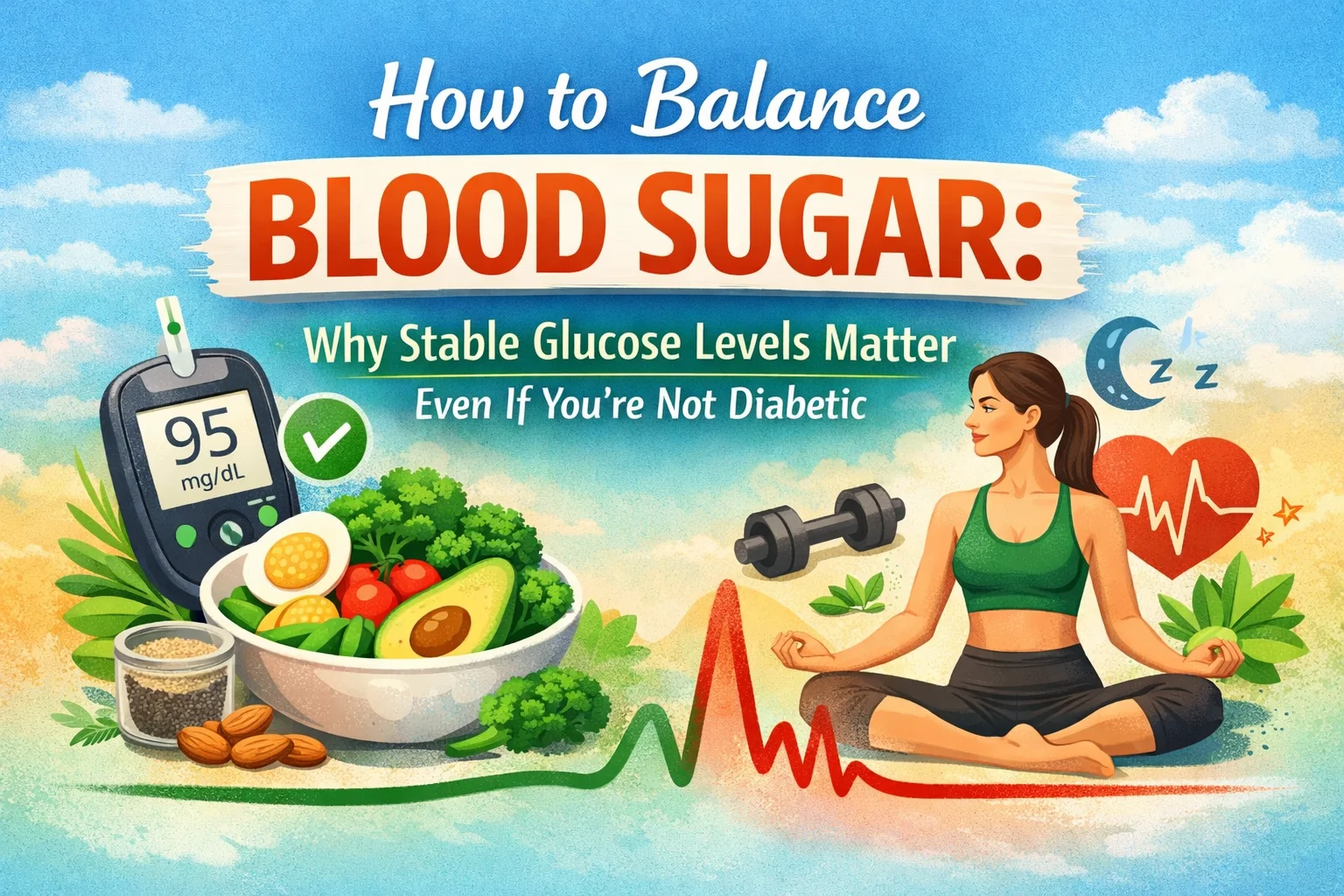
Most people think blood sugar control is only important for individuals with diabetes. In reality, stable blood glucose levels are essential for everyone, regardless of age, weight, or medical history. Even if you are not diabetic, frequent blood sugar spikes and crashes can quietly affect your energy, mood, focus, weight, hormones, and long-term health.
In this guide, we’ll break down what blood sugar is, why balance matters even for non-diabetics, common signs of imbalance, and practical, science-backed ways to keep glucose levels stable naturally.
What Is Blood Sugar and How Does It Work?
Blood sugar, or blood glucose, refers to the amount of glucose present in your bloodstream. Glucose is your body’s primary source of energy and comes mainly from carbohydrates such as grains, fruits, vegetables, and sugars.
The Role of Insulin
When you eat, your blood sugar rises. In response, the pancreas releases insulin, a hormone that helps move glucose from the blood into cells where it’s used for energy or stored for later.
When this system works well:
- Blood sugar rises gently after meals
- Insulin efficiently clears glucose
- Energy levels stay steady
When it doesn’t:
- Blood sugar spikes sharply
- Insulin overreacts
- Blood sugar crashes, leading to fatigue and cravings
Over time, repeated spikes can stress the body even in people without diabetes.
People also love to read:- How to Reduce Stress and Anxiety in Just 5 Minutes: Mindfulness Tips for Busy Lives
Why Stable Blood Sugar Matters Even If You’re Not Diabetic
1. Prevents Energy Crashes and Fatigue
If you often feel energetic after eating but exhausted an hour later, unstable blood sugar may be the cause. Rapid glucose spikes followed by crashes can leave you feeling:
- Tired
- Sluggish
- Mentally foggy
Balanced blood sugar supports consistent energy throughout the day.
2. Supports Healthy Weight Management
Blood sugar imbalances increase insulin levels, and insulin promotes fat storage especially around the abdomen.
Stable glucose levels help:
- Reduce unnecessary fat storage
- Control hunger hormones
- Prevent overeating and sugar cravings
This is why blood sugar balance is critical for sustainable weight loss, not just calorie counting.
3. Improves Focus, Mood, and Mental Clarity
Your brain relies heavily on glucose. Sudden drops can trigger:
- Irritability
- Anxiety
- Difficulty concentrating
- Mood swings
Maintaining stable glucose helps keep your mind calm, sharp, and emotionally balanced.
4. Reduces Risk of Insulin Resistance
Chronic blood sugar spikes can lead to insulin resistance, a condition where cells stop responding effectively to insulin. This is often the first step toward:
- Prediabetes
- Type 2 diabetes
- Metabolic syndrome
Balancing blood sugar early can prevent future health complications.
5. Supports Hormonal Health
Blood sugar imbalance can disrupt hormones like:
- Cortisol (stress hormone)
- Estrogen and progesterone
- Testosterone
This may lead to issues such as poor sleep, irregular periods, low libido, or chronic stress.
Common Signs of Blood Sugar Imbalance (Even Without Diabetes)
You don’t need a diagnosis to experience symptoms. Watch for:
- Strong sugar or carb cravings
- Feeling shaky or dizzy between meals
- Brain fog
- Frequent hunger
- Mood changes after eating
- Difficulty losing weight
- Afternoon energy crashes
If several of these sound familiar, improving blood sugar balance can make a big difference.
Also Read:- Tasty & Healthy Snack Ideas You’ll Want to Eat Every Day
How to Balance Blood Sugar Naturally
1. Eat Balanced Meals (Not Just Low Sugar)
Instead of cutting carbs completely, focus on balanced plates.
Ideal Meal Formula:
- Protein (eggs, lentils, tofu, yogurt)
- Healthy fats (nuts, seeds, olive oil)
- Fiber-rich carbs (vegetables, whole grains)
- Low-glycemic fruits
Protein and fat slow glucose absorption, preventing spikes.
2. Avoid Refined and Liquid Sugars
Sugary drinks and refined carbs cause the fastest blood sugar spikes.
Limit:
- Soda and packaged juices
- White bread and pastries
- Candy and desserts
- Sweetened cereals
Choose:
- Whole fruits instead of juice
- Whole grains over refined flour
3. Eat at Regular Intervals
Skipping meals can cause blood sugar drops followed by overeating later.
Tips:
- Eat every 3–4 hours
- Don’t skip breakfast
- Include protein in snacks
This helps maintain a steady glucose supply.
4. Start Meals With Fiber or Protein
The order in which you eat food matters.
Start with:
- Vegetables
- Protein
Then eat carbohydrates. This simple habit can reduce glucose spikes significantly.
5. Manage Stress Levels
Stress increases cortisol, which raises blood sugar—even without food.
Helpful practices:
- Deep breathing
- Meditation
- Walking in nature
- Adequate sleep
Reducing stress is just as important as diet.
6. Stay Physically Active
Movement helps muscles absorb glucose without needing as much insulin.
Best activities:
- Walking after meals
- Strength training
- Yoga
- Cycling
Even 10–15 minutes of movement after eating can improve blood sugar control.
7. Prioritize Quality Sleep
Poor sleep increases insulin resistance and cravings.
Aim for:
- 7–9 hours of sleep
- Consistent sleep schedule
- Reduced screen time before bed
Good sleep = better glucose control.
Foods That Help Balance Blood Sugar
Best Blood Sugar–Friendly Foods
- Leafy greens
- Beans and lentils
- Nuts and seeds
- Greek yogurt or curd
- Berries
- Whole grains like oats and quinoa
- Healthy oils (olive, coconut)
Foods to Limit
- Sugary snacks
- Refined flour products
- Processed foods
- Sweetened beverages
Should Non-Diabetics Monitor Blood Sugar?
You don’t need daily testing, but being aware helps.
You may benefit from monitoring if you:
- Feel frequent energy crashes
- Have family history of diabetes
- Struggle with weight or cravings
- Experience hormonal imbalances
Occasional testing or wearable glucose monitors (under guidance) can offer valuable insights.
Long-Term Benefits of Balanced Blood Sugar
Maintaining stable glucose levels supports:
- Heart health
- Brain function
- Healthy aging
- Hormonal balance
- Disease prevention
It’s not just about avoiding diabetes it’s about thriving every day.
Final Thoughts: Blood Sugar Balance Is a Lifestyle, Not a Diagnosis
You don’t need to wait for a medical condition to start caring about your blood sugar. Small daily habits balanced meals, movement, sleep, and stress management can dramatically improve how you feel and function.
Stable blood sugar means:
- More energy
- Better focus
- Fewer cravings
- Long-term wellness
Whether you’re diabetic or not, balancing blood sugar is one of the most powerful foundations of a healthy life.